
 | Prof. Yaochu JinIEEE Fellow Member of the Academia Europaea Westlake University, China Yaochu Jin is presently Chair Professor of AI, Head of the Artificial Intelligence Department, Director of the Trustworthy and General AI Laboratory, School of Engineering, Westlake University, Hangzhou, China. Prior to that, he was“Alexander von Humboldt Professor for Artificial Intelligence”, with the Faculty of Technology, Bielefeld University, Germany from 2021 to 2023, and Surrey Distinguished Chair, Professor in Computational Intelligence, Department of Computer Science, University of Surrey, Guildford, U.K. from 2010 to 2021. His current main research interests include trustworthy industrial AI, brain-like embodied intelligence, and AI for arts and sciences. Prof Jin was the President of the IEEE Computational Intelligence Society and the Editor-in-Chief of Complex & Intelligent Systems. He is the recipient of the 2025 IEEE Frank Rosenblatt Award. He was named “Highly Cited Researcher” by Clarivate from 2019 consecutively. He is a Member of Academia Europaea and Fellow of IEEE. |
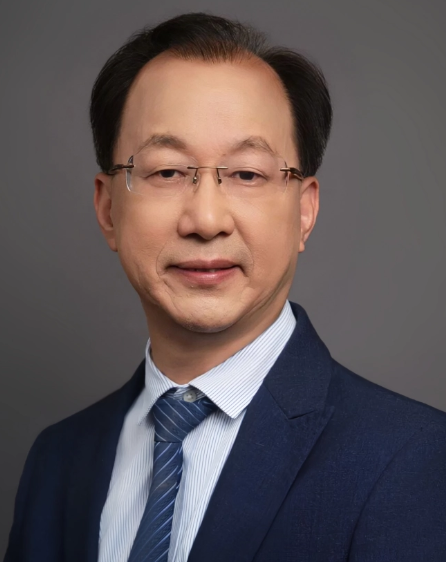 | Prof. Daqing ZhangIEEE Fellow Member of the Academia Europaea Peking University, China DaqingZhang, is a Chair Professor at the School of EECS, Peking University, China and Vice Chair of CCF Pervasive Computing Technical Committee. His research interests include context-aware computing, mobile computing, big data analytics and pervasive elderly care. He obtained his Ph.D. from University of Rome “La Sapienza”, Italy in 1996. Dr. Zhang has published several books and more than 200 technical papers in leading conferences and journals, where his work on context model and context middleware is widely accepted by the pervasive computing, mobile computing, networking and service-oriented computing communities. He served as the general or program chair for more than 10 international conferences, giving keynote talks at around 20 international conferences. He is the associate editor for IEEE Pervasive Computing, IEEE Transactions on Big Data, ACM Transactions on Intelligent Systems and Technology, ACM Proceeding of IMWUT, etc. In recent years, he has been exploring new areas such as "Social and Community Intelligence (SCI)", "Mobile Crowd Sensing (MCS)" and "Contactless Sensing" which aim to push context-aware computing to new frontiers. Dr. Zhang is the winner of the Ten-years CoMoRea impact paper award at IEEE PerCom 2013, the Honorable Mention Award at ACM UbiComp 2016 and 2015, the Best Paper award at IEEE UIC 2015 and 2012, and the Best Paper Runner Up award at Mobiquitous 2011. |
 | Prof. Licheng JiaoIEEE Fellow Member of the Academia Europaea Xidian University, China Licheng Jiao has been a full professor in Xidian University since 1992. He is the member of the Academia Europaea. He is the HuaShan Outstanding Professor of Xidian University, the director of the Faculty of Computer Science and Technology of Xidian University, International Research Center for Intelligent Perception and Computation, Key Laboratory of Intelligent Perception and Image Understanding of Ministry of Education, Joint International Research Laboratory of Intelligent Perception and Computation, and National Base of Intelligent Information Processing. His professional activities include IEEE/IET/CAAI/CAA /CCF/CIE Fellow, the member of the International Division of Scientific and Technological Committee of the Ministry of Education in China, the vice board chairperson of Chinese Association of Artificial Intelligence. He is the chairman of IET Xi’an Network, the Xi’an Chapter of IEEE Computational Intelligence Society, the Award Commission of IEEE Xi’an Chapter, and the Xi’an Chapter of IEEE Geoscience and Remote Sensing Society. He is the Associate Editor of “IEEE Transactions on Geoscience and Remote Sensing” and “IEEE Transactions on Cybernetics”, the Presiding Panelist for the Innovative Team in the Ministry of Education, the member of the Subject Consultative Group of the State Council and the expert of the Undergraduate Teaching Level Evaluation of the Ministry of Education, evaluation expert of the National Natural Science Foundation Information Division, member of the Assessment Panel of National Postdoctoral Management Committees. He has been receiving special government allowance from the State Council since 1991. In 1996, he was included among the first batch of in the New Century Talents Project (the first and second classes) and the “Three Fives” Talent Project of Shaanxi Province. He was selected as the National Model Teacher by the Ministry of Human Resources and Social Security of China, the Outstanding Contribution Expert of Shaanxi Province, the Teacher Pacemaker of Ethics in Shaanxi Province, and the deputy of the 8th National People’s Congress. |
 | Prof. Yun LiIEEE Fellow Shenzhen Institute for Advanced Study, UESTC, China Professor Yun Li , IEEE Fellow, taught at University of Glasgow for 28 years since 1991, where he supervised 30 doctoral students on “AI for Science and Engineering”, was recognized as the second Top Author, and served as the founding Director of University of Glasgow Singapore. In 2021, he founded the Industrial Artificial Intelligence Centre and is currently its Chief Scientist as well as Chief Scientist of the AI and Robotics Institute, Shenzhen Institute for Advanced Study, University of Electronic Science and Technology of China, where he serves as Changjiang Chair Professor. Prof Li has published over 300 papers and books, and holds over 30 patents in China, Europe, United States and Japan. He has been funded over 20 million pounds to led or co-led over 30 research projects in the UK, EU, Singapore, and China, and currently leads 3 major research projects funded by the National Natural Science Foundation of China for the next-generation AI models and by the National Key R&D Program of China for the next-generation AI chips. |
 | Prof. Haitao ZhangIEEE Fellow National Science Fund for Distinguished Young Scholars Huazhong University of Science and Technology, China Prof. Hai-Tao Zhang is the Deputy Dean of the School of Artificial Intelligence and Automation at Huazhong University of Science and Technology (HUST), an Endowed Chair Professor at Huazhong, an IEEE Fellow, a recipient of the State Council Special Allowance, a recipient of Natioinal Science Fund for Distinguished Young Scholars, and Natioinal Science Fund for Excellent Young Scholars. He is the Director of the Ministry of Education Engineering Center for Autonomous Intelligent Unmanned Systems, and the Chief Scientist of the National Key R&D Program on New-Generation Artificial Intelligence under the National Science and Technology Innovation 2030 initiative. He obtained his Ph.D. from the University of Science and Technology of China in 2005, conducted postdoctoral research at the University of Cambridge in 2007. Zhang specializes in areas such as swarm intelligence, autonomous unmanned surface vehicle fleets coopeartion, and multi-robot collaborative manufacturing. He has led several major national-level projects, including the National Science and Technology Innovation 2030 Key Projects, two joint key projects funded by the National Natural Science Foundation of China, and GF Key Projects. He has published more than 110 papers in prestigious journals such as Nature Machine Intelligence, Nature Communications, National Science Review, Automatica, and IEEE Trans/Journal/Magazine. He has authored three English monographs published by Springer. Zhang has received two First Prizes for Natural Science in Hubei Province and one First Prize for Technological Invention in Guangdong Province, all as the first awardees. He has been listed among Stanford University's top 2% of global scientists. His theoretical achievements in swarm intelligence have been highlighted by Nature Physics, and his applied research results have been reported by the State Council. He holds 40 authorized invention patents, 6 of which have been transferred to major enterprises, and has contributed to one national standard. His research achievements have been commercialized in organizations such as China State Shipbuilding Corporation and Guangzhou Shipyard International. He is/was an editorial board member or associate editor for journals including IEEE Trans. SMC-Systems, IEEE Trans. CAS II, Engineering , Unmanned Systems, Control Theory and Applications, and Robot. Additionally, he has been on the program committees of important international conferences such as IEEE CDC, IROS, ACC, and IFAC. |
 | Prof. Jing XuNational Science Fund for Distinguished Young Scholars Tsinghua University, China Jing Xu, Tenured Professor at Tsinghua University, Doctoral Supervisor, and recipient of the National Science Fund for Distinguished Young Scholars. His research primarily focuses on intelligent robotics and smart manufacturing. He has led dozens of projects, including those funded by the National Natural Science Foundation of China and the Beijing Natural Science Foundation. He has published over 100 SCI-indexed papers in journals such as IEEE TRO and IEEE TPAMI, with several papers being selected as highly cited papers or receiving best paper awards at international conferences. He has also authored one English monograph. As the first inventor, he has been granted more than 40 invention patents. As the first contributor, he has received numerous awards, including the First Prize of the Beijing Technical Invention Award, China's Top Ten Scientific and Technological Progress in Intelligent Manufacturing, the First Prize of the Technical Invention Award from the China Instrument and Control Society, the Grand Prize of the Beijing Invention and Innovation Competition, and the First Prize of the Invention and Entrepreneurship Award from the China Invention Association. He has been named among Stanford University's world's top 2% scientists. He has also won the First Prize of the National Teaching Achievement Award in Higher Education and the First Prize of the Beijing Higher Education Teaching Achievement Award. He serves as an editorial board member for journals such as Robotica. |
| Prof. Yang TangIEEE Fellow, AAIA Fellow National Distinguished Professor East China University of Science and Technology, China Yang Tang (Fellow, IEEE) received the B.S. and Ph.D. degrees in electrical engineering from Donghua University, Shanghai, China, in 2006 and 2010, respectively. From 2008 to 2010, he was a Research Associate with The Hong Kong Polytechnic University, Hong Kong. From 2011 to 2015, he was a Post-Doctoral Researcher with the Humboldt University of Berlin, Berlin, Germany, and with the Potsdam Institute for Climate Impact Research, Potsdam, Germany. He is now a Professor with the East China University of Science and Technology, Shanghai. His current research interests include distributed estimation/control/optimization, agentic AI, computer vision, reinforcement learning, cyber-physical systems, hybrid dynamical systems, and their applications. Prof. Tang is an IEEE Fellow. He was a recipient of the Alexander von Humboldt Fellowship. He is a Co-Editor-in-Chief of IEEE Transactions on Industrial Informatics, an Senior Area Editor of IEEE Transactions on Circuits and Systems-I: Regular Papers, Associate Editor of IEEE Transactions on Neural Networks and Learning Systems, IEEE Transactions on Cybernetics, IEEE Transactions on Industrial Informatics, IEEE/ASME Transactions on Mechatronics, IEEE Transactions on Circuits and Systems-I: Regular Papers, IEEE Transactions on Cognitive and Developmental Systems, IEEE Transactions on Emerging Topics in Computational Intelligence, IEEE Systems Journal, Engineering Applications of Artificial Intelligence (IFAC Journal), Science China Information Sciences, Science China Technological Sciences and Acta Automatica Sinica, etc. He is an IEEE Distinguished Lecturer from 2026-2027. He has published more than 200 papers in international journals and conferences, including more than 160 papers in IEEE Transactions and 20 papers in IFAC journals. He has been awarded as best/outstanding Associate Editor in IEEE journals for six times. He is a (leading) guest editor for several special issues focusing on autonomous systems, robotics, and industrial intelligence in IEEE Transactions. |

TBD.....